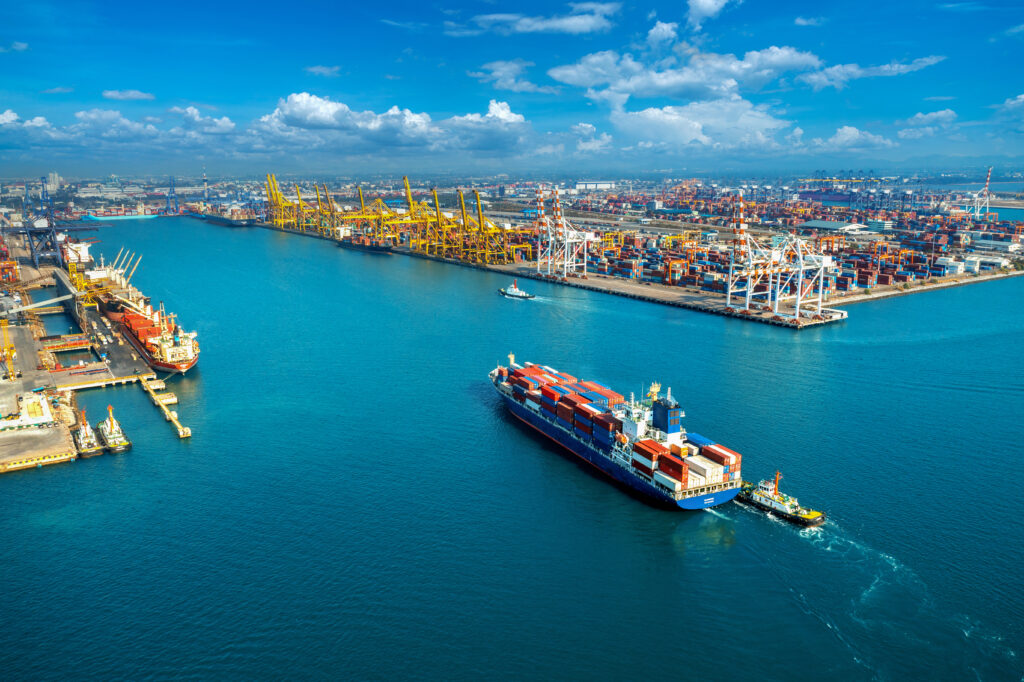
During the past five years, the maritime transportation industry has undergone one of the most significant transformations in its recent history. The pandemic, port congestion, geopolitical tensions, freight-rate volatility, and the accelerated introduction of new vessels have changed the way shipping lines plan their operations and how companies must manage their supply chains. Today, the market no longer responds solely to the supply and demand of a specific route. Capacity decisions, changes in service networks, and fleet redeployment have a global impact that can affect space availability, transit times, and logistics costs in any region of the world. At Enjoy Business, we analyze the main trends that are reshaping international maritime transportation and that will continue to influence the market in the coming years.
Hoy el mercado ya no responde únicamente a la oferta y la demanda de una ruta específica. Las decisiones de capacidad, los cambios en las redes de servicio y la redistribución de flotas tienen un impacto global que puede afectar la disponibilidad de espacio, los tiempos de tránsito y los costos logísticos en cualquier región del mundo.
En Enjoy Business analizamos las principales tendencias que están redefiniendo el transporte marítimo internacional y que seguirán marcando el mercado durante los próximos años.
From Capacity Shortages to a New Market Cycle
Between 2020 and 2022, the industry faced an unprecedented scenario. The rapid recovery of global consumption, congestion at major ports, and operational restrictions caused a significant shortage of capacity and a historic increase in maritime freight rates.
In response to this situation, shipping lines launched one of the largest investment programs in the sector’s history, ordering hundreds of new container vessels to expand their operating capacity.
Starting in 2023, with the gradual normalization of supply chains, the market began to enter a new phase characterized by greater vessel availability and more intense competition among operators.
However, new developments, such as the crisis in the Red Sea and the need to reroute services around the Cape of Good Hope, once again altered the balance between supply and demand, absorbing part of the available global capacity and generating new increases in transit times.
Capacity Management Has Become the Market’s Main Tool
Today, shipping lines no longer compete solely through freight rates or geographic coverage.
Strategic capacity management has become one of the key factors in maintaining market stability. It is increasingly common to see:
· Reconfiguration of services across trade lanes.
· Temporary cancellation of sailings (blank sailings) to balance supply.
· Redeployment of vessels to routes with higher demand.
· Optimization of port calls.
· Greater flexibility in operational alliances and fleet allocation.
This behavior reflects an industry seeking to adapt quickly to changes in international trade while minimizing the risk of operating with excess or insufficient capacity.
What Can We Expect in 2027 and 2028?
Leading maritime analysis centers agree that the market could enter a new cycle of structural overcapacity as the delivery of new container vessels continues.
However, the scale of this scenario will depend on factors such as:
- The evolution of global economic growth.
- The performance of international trade.
- The pace at which older vessels are retired from the fleet.
- The definitive normalization of routes affected by geopolitical conflicts.
- New environmental and energy-efficiency regulations.
- The ability of shipping lines to continue adjusting their service networks.
What Does This Mean for Businesses?
Beyond fluctuations in freight rates, the main challenge will be planning.
Companies that manage their operations with up-to-date information, diversify their logistics alternatives, and anticipate their transportation needs will be better prepared to respond to an increasingly dynamic market.
International logistics will no longer be measured solely by freight costs. It will increasingly be evaluated by the ability to anticipate risks, ensure operational continuity, and respond quickly to changes in the global environment.
Enjoy Business Vision
At Enjoy Business, we believe that modern logistics requires much more than simply coordinating a shipment. It requires understanding the trends that are transforming international trade and turning that information into strategic decisions for our clients.
For this reason, we continuously monitor capacity indicators, maritime route performance, freight-rate trends, port congestion, international regulations, and global supply dynamics, with the goal of providing more efficient logistics solutions adapted to a constantly evolving market.
Because when the market changes, the best competitive advantage is being prepared.
Enjoy Business
TOGETHER, WE MOVE THE WORLD!